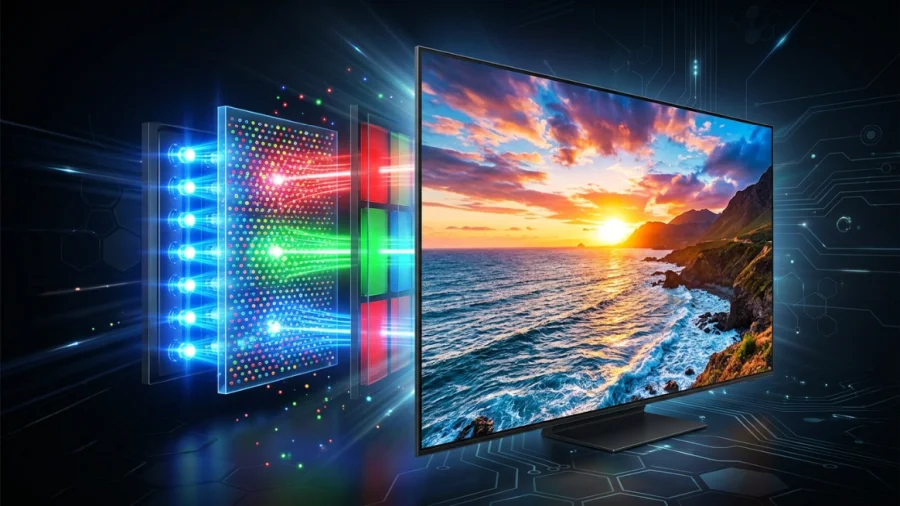
QLED (Quantum Light-Emitting Diode) is a display technology that uses microscopic semiconductor particles called quantum dots to dramatically enhance the color and brightness output of traditional LED/LCD panels. It is not entirely a new screen type so much as a significant and scientifically sophisticated upgrade to a familiar one.
In a world where streaming services broadcast in 4K HDR, where gaming demands split-second visual clarity, and where remote workers stare at monitors for eight hours a day, the quality of a display is no longer a luxury concern. It is a practical one. Understanding what QLED does, and how, helps explain why it has become the dominant premium television technology of the current era.
The Science Behind QLED
At the heart of QLED technology are quantum dots: nanocrystals typically made from semiconducting materials such as cadmium selenide or, in newer cadmium-free versions, indium phosphide.
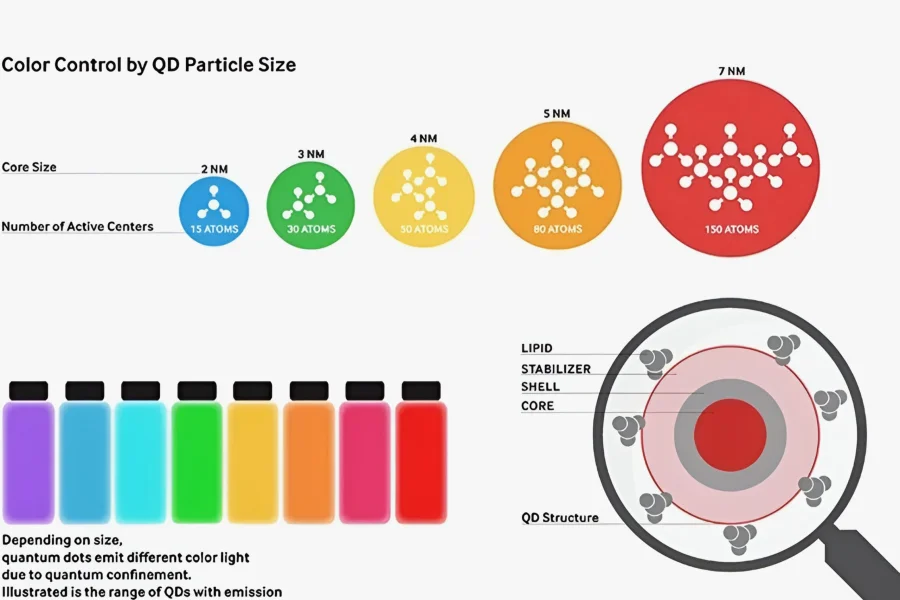
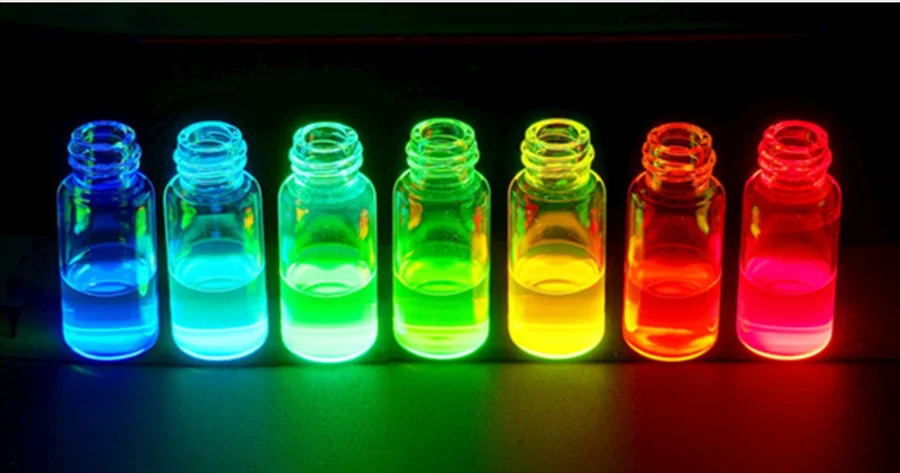
These particles are extraordinarily small – measured in nanometers, with sizes ranging from roughly 2 to 10nm. What makes them remarkable is a property rooted in quantum mechanics: their size directly determines the wavelength of light they emit.
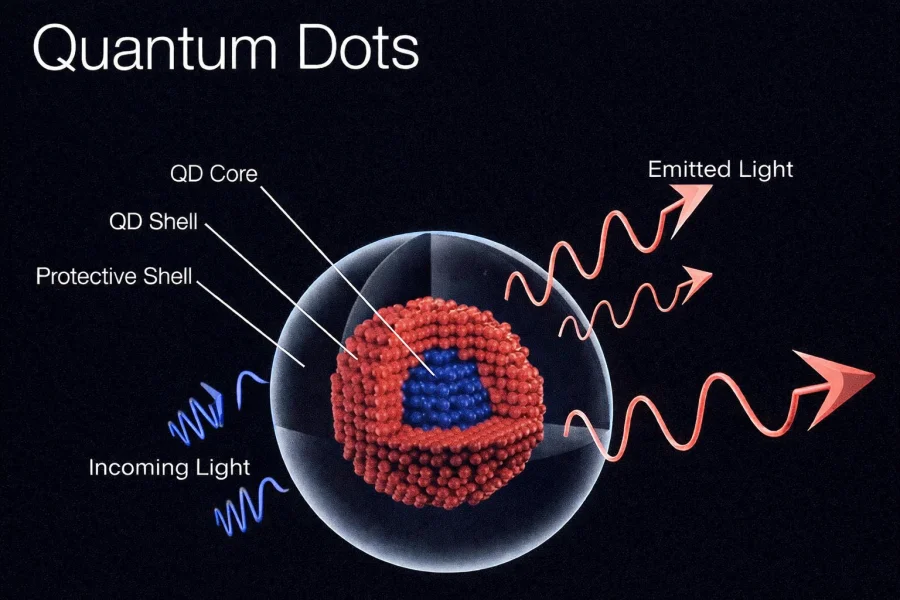
When a quantum dot is struck by light, usually blue light from an LED backlight, it absorbs that energy and re-emits it as a very precise, narrow band of color through a process called photoluminescence.
In other words, when a quantum dot is exposed to an external energy source its electrons absorb enough energy to break free from their atomic orbits and enter what is known as the conduction band, a state in which they move freely through the material.
This freedom is short-lived: the electrons soon fall back into their original orbits, and as they do, they release the absorbed energy as light. The color of that emitted light depends directly on how much energy is released, which, in turn, is governed by the size of the dot itself.
A smaller dot emits blue light; a slightly larger one emits green; the largest emits red.
Because the emission spectrum of quantum dots is so narrow and so tunable, the resulting colors are far purer than what conventional phosphor-based backlighting can achieve. There is less spectral overlap between red, green, and blue channels, which means colors do not bleed into one another and the display can render a wider portion of the visible color spectrum.
In a traditional LED/LCD television, white LEDs backlight a liquid crystal layer, which uses color filters to produce the final image. The problem is that white LEDs emit a relatively broad, impure spectrum, and the color filters must do heavy lifting to separate the hues – a process that wastes light and compromises color accuracy.
QLED replaces or augments this system by placing a quantum dot film in front of a blue LED backlight. The blue light excites the dots, which convert it into precisely calibrated red and green wavelengths. Combined with the remaining blue light, this produces a far cleaner, brighter white – and from there, far more accurate colors.
QLED vs. The Competition
The display market is more crowded than ever, and QLED occupies an interesting position within it. Its most prominent rival is OLED – Organic Light-Emitting Diode, which works on an entirely different principle. Rather than using a backlight, OLED panels have pixels that produce their own light individually, allowing them to switch off completely and achieve true, absolute black.
On paper, OLED wins the black-level battle. True blacks are something a backlit display simply cannot match, and this gives OLED an inherent advantage in contrast ratio and perceived depth of image. However, QLED punches back hard on brightness. High-end QLED televisions can reach peak brightness levels of 2,000 to 4,000 nits or more, while OLED panels typically top out significantly lower.
In HDR content, where both very bright highlights and deep shadows exist simultaneously, this brightness advantage becomes meaningful in well-lit rooms. QLED also maintains its brightness and color accuracy over a longer lifespan, and it does not carry the risk of permanent burn-in that can afflict OLED panels used for static content like news tickers or desktop interfaces.
Compared to conventional LED televisions without quantum dots, QLED offers a substantial upgrade in color volume – the ability to display a wide range of colors at high brightness levels simultaneously. Standard LED sets can struggle to maintain color accuracy as brightness increases, whereas QLED’s quantum dot layer enables rich, saturated color even at maximum output.
Mini-LED and MicroLED are newer entrants that complicate the picture. Mini-LED TVs use thousands of tiny LED zones as a backlight, often combined with quantum dot layers, effectively making them “Mini-LED QLED” displays. This pairing delivers better local dimming and improved black levels while retaining quantum dot color benefits.
MicroLED, meanwhile, is a future-facing technology where individual LEDs serve as self-emissive pixels, potentially offering the best of both worlds: OLED-like contrast with QLED-like brightness. It remains expensive and limited in availability, but it represents the direction the industry is heading.
Key Advantages of QLED
QLED’s most immediate strength is peak brightness. In HDR formats like HDR10+ and Dolby Vision, content is graded with highlights that can reach thousands of nits, and QLED panels are uniquely capable of doing justice to that mastering. A sunny window in a film or a glinting car hood looks genuinely luminous on a QLED screen in a way that duller displays simply cannot reproduce.
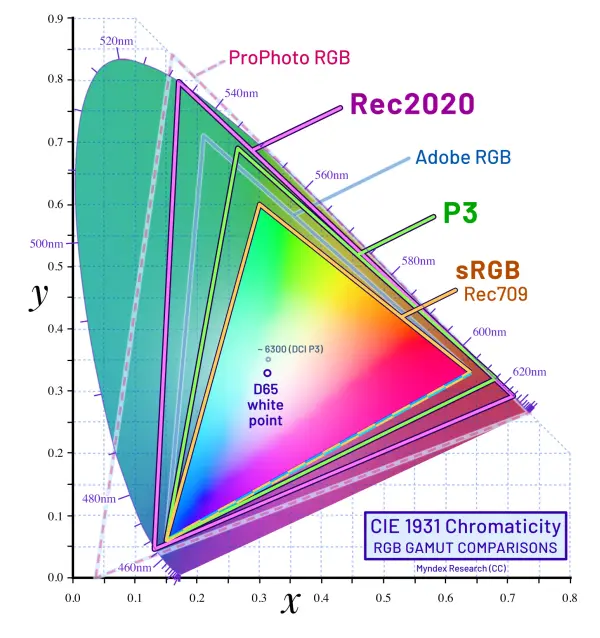
Color accuracy is the other headline feature. QLED displays routinely cover 90% or more of the DCI-P3 color space used in cinema production, and many cover a significant portion of the even wider Rec. 2020 standard. For photographers, video editors, and anyone consuming high-quality media, this translates directly to images that are truer to how they were created.
Longevity is a quieter but important advantage. Quantum dot materials are inorganic, meaning they do not degrade the way organic compounds in OLED panels do. A QLED display can maintain its brightness and color performance for tens of thousands of hours without meaningful degradation. And because all pixels remain active rather than individual ones aging faster than others, burn-in, the ghosting of static images into the panel – is essentially a non-issue.
Finally, QLED’s efficiency is noteworthy. Because quantum dots convert light so effectively, less backlight power is needed to achieve a given level of brightness compared to conventional LED panels, which contributes to lower energy consumption relative to output.
Limitations and Challenges
QLED is not without its drawbacks. The most significant is viewing angle. Because QLED retains the liquid crystal layer of traditional LED/LCD construction, image quality can degrade noticeably when viewed from off-axis: colors shift, contrast drops, and brightness falls.
OLED panels, being self-emissive, maintain consistent image quality at wide angles. Panel manufacturers have worked to address this with optical films and VA versus IPS panel choices, but it remains a genuine limitation compared to OLED in living room settings where viewers are spread across a wide seating area.
Black levels, while improved relative to conventional LED TVs, still cannot match OLED. Even with sophisticated local dimming systems dividing the backlight into hundreds or thousands of zones, some light bleed remains. In a dark room watching dark content, a careful observer will notice faint halos around bright objects on a black background – a phenomenon called blooming.
Cost is also a consideration. True QLED displays, particularly those with a quantum dot film and high zone-count local dimming – sit at a price premium above standard LED TVs. The gap has narrowed considerably as the technology matures, but it still exists.
Real-World Applications
Consumer televisions are the most visible application of QLED, where manufacturers have deployed the technology in flagship and mid-range sets with notable success. The gaming monitor market has embraced QLED warmly as well: high brightness, wide color gamut, and compatibility with variable refresh rate technologies make QLED panels compelling for both console and PC gaming, where HDR game content increasingly demands displays capable of making the most of it.
In commercial and professional environments, QLED’s brightness makes it well-suited for digital signage, retail displays, and control room monitors where ambient light would wash out dimmer panels. Color-critical professionals in photography and video production have also adopted calibrated QLED monitors as viable alternatives to traditionally preferred display types.
Looking further ahead, quantum dot technology is being explored in augmented and virtual reality headsets, where achieving vivid color in compact, power-efficient form factors is essential. The automotive industry is beginning to integrate high-brightness displays into dashboards and infotainment systems where sunlight legibility is critical – another environment where QLED’s brightness advantage shines, literally.
Conclusion
QLED represents one of the most successful marriages of fundamental physics and consumer technology in recent memory. By harnessing the quantum mechanical behavior of nanocrystals to produce purer, brighter light, it transformed what was already a mature display category into something genuinely better.
It is not a perfect technology, OLED still leads in contrast, and emerging formats like MicroLED may eventually supersede it, but for the majority of viewing environments and use cases today, QLED delivers a compelling combination of brightness, color accuracy, durability, and value.
For consumers making a purchasing decision, the key insight is context. QLED rewards well-lit rooms, HDR content, and varied use cases where burn-in is a concern. It is a technology built for the way most people actually watch, and increasingly, the way most content is actually made.
Q&A
Which is better, QLED or 4K?
These two terms describe different things and are not mutually exclusive. 4K refers to resolution – the number of pixels on screen, while QLED refers to the display technology used to produce color and light. Most QLED televisions are also 4K, so the comparison is a bit like asking whether a car is better or faster – they measure different qualities. If you are choosing between a 4K non-QLED set and a 4K QLED set, the QLED will generally deliver superior brightness, color accuracy, and HDR performance.
What is the downside of QLED TV?
The main weaknesses of QLED are viewing angles and black levels. Because QLED uses a liquid crystal layer, particularly VA-type panels common in QLED sets, picture quality can shift noticeably when viewed from the side. Black levels, while better than standard LED, also cannot match OLED, meaning dark scenes may show faint light bleed around bright objects. Price is another consideration, as quality QLED sets sit above budget LED options.
What is the lifespan of a QLED TV?
QLED televisions are built to last. Because quantum dot materials are inorganic, they resist the gradual brightness degradation that affects organic display technologies like OLED. Most manufacturers rate QLED panels at 100,000 hours of use before reaching half their original brightness – the equivalent of watching television for several hours a day for decades. Burn-in, which can shorten the effective lifespan of OLED sets, is not a concern with QLED.
Is QLED really worth it?
For most people, yes – particularly if you watch in a moderately lit room, consume a lot of HDR content, or use your TV for gaming. QLED delivers a meaningful step up from standard LED in brightness and color, and it does so without the burn-in risk of OLED. If you watch primarily in a dark room and prioritize perfect blacks and contrast above all else, OLED may serve you better. But for everyday mixed use, QLED offers an excellent balance of performance, durability, and value.
Read Next
HDR Tone Mapping on TVs
Direct Lit vs Edge Lit vs Full Array: Decoding TV Backlight Technology

UWQHD: Ultra-Wide Quad HD Resolution Explained

LTPO OLED Display Technology: AMOLED Gets Adaptive

OLED Technology Explained: The Cornerstone of Modern Displays
Dell G2422HS Review: 165Hz 1ms 1920 x 1080 IPS; Budget Gamer’s Delight

2K Resolution Size: Understanding the Midpoint Between HD and 4K
Mini LED vs OLED: Which Display Technology Reigns Supreme?

Hybrid Log–Gamma (HLG): Combining SDR and HDR
HDR10 vs HDR10+ in Gaming: What’s the Difference and Does It Matter?

4K Resolution: Ultimate Experience for TVs and Monitors
QHD vs 4K: Right Resolution for Your Display
Retina Displays vs. 300 DPI: A Deep Dive into Perceived Resolution