
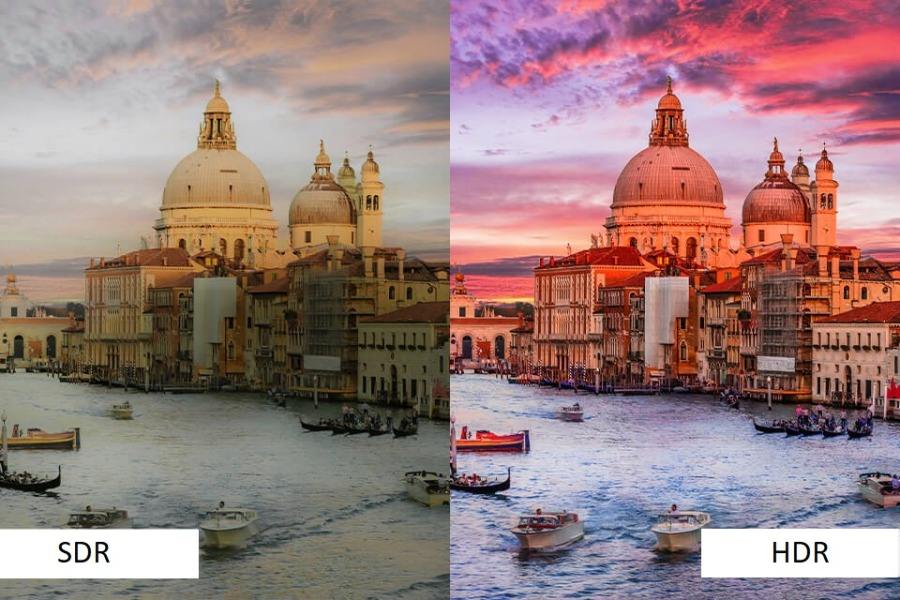
High Dynamic Range (HDR) has fundamentally changed how we experience video content at home. By expanding the range between the darkest shadows and the brightest highlights, HDR creates images that feel more lifelike and visually compelling than standard dynamic range (SDR) ever could.
But HDR is not a single technology – it’s an umbrella term covering several competing formats, each with distinct technical approaches, licensing models, and real-world performance characteristics.
Understanding the differences between HDR10, HDR10+, Dolby Vision, and HLG helps consumers and content creators make smarter decisions about what they watch, how they produce content, and which devices are worth investing in.
HDR10: The Baseline Standard
HDR10 is the foundation upon which the entire modern HDR ecosystem is built. Introduced in 2015 and quickly adopted as an open, royalty-free standard, HDR10 is supported by virtually every HDR-capable television, monitor, streaming service, Blu-ray player, and gaming console on the market.
Its universality makes it the lowest common denominator of HDR formats, and that is both its greatest strength and its most significant limitation.
Technically, HDR10 supports a peak brightness of up to 10,000 nits, though most consumer displays top out well below that figure.
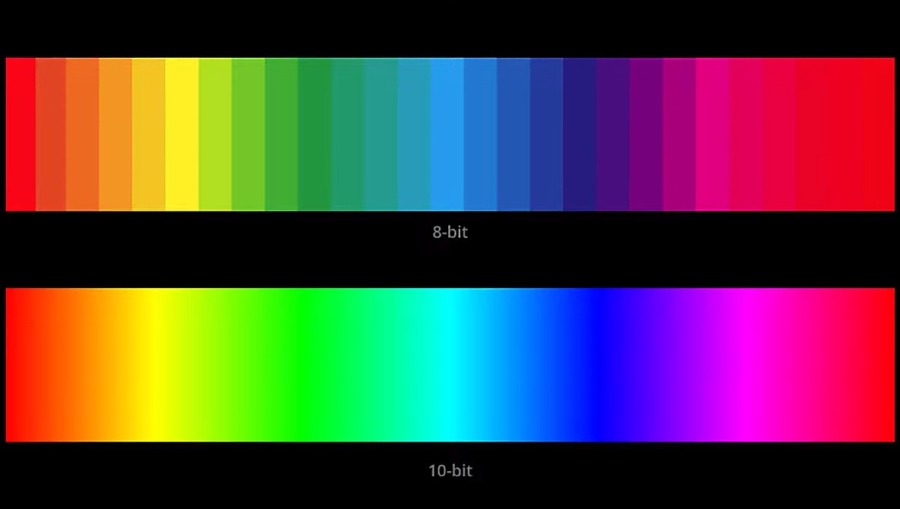
It uses 10-bit color depth, which allows for over one billion distinct colors, a substantial improvement over the roughly 16 million colors possible with standard 8-bit SDR content.
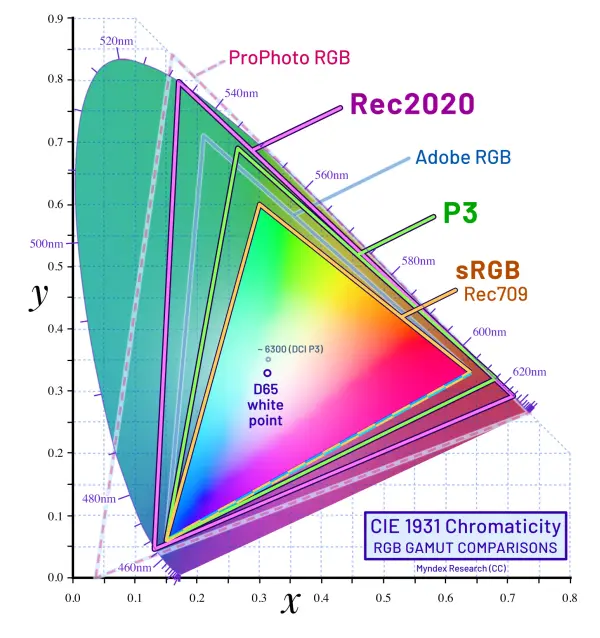
HDR10 also employs the BT.2020 (Rec. 2020) color space, which defines a much wider gamut of reproducible colors than the BT.709 standard used for SDR.
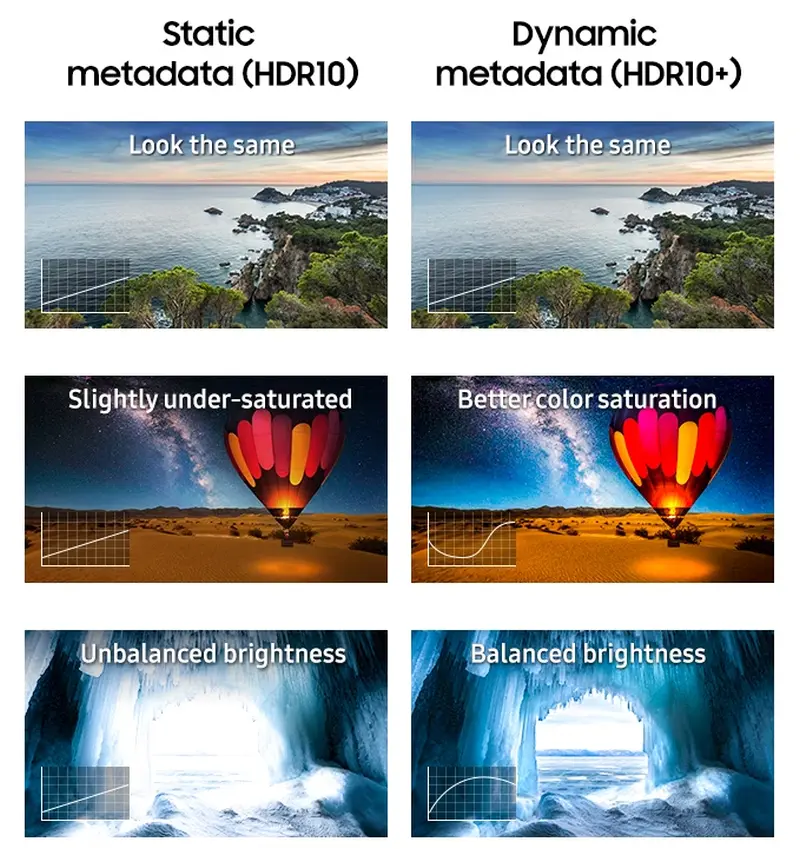
The defining characteristic of HDR10 is its use of static metadata.
When a film or video is mastered for HDR10, a single set of metadata values, specifically the maximum content light level (MaxCLL) and maximum frame average light level (MaxFALL) – is embedded in the stream and applied uniformly across the entire piece of content. The display uses this information to calibrate how it presents light and color throughout the viewing experience.
The problem with static metadata becomes apparent in practice. A film might have one extraordinarily bright explosion in the third act and predominantly dark, subdued nighttime scenes everywhere else. With static metadata, the display is essentially tuned for the entire film based on a single set of brightness instructions.
It cannot adapt to the needs of individual scenes or frames, which can result in crushed highlights, washed-out darks, or both, depending on how the display interprets the static values.
Despite this limitation, HDR10 remains indispensable. Its open and royalty-free nature means manufacturers can implement it at no cost, which is why it appears everywhere – from budget televisions to professional reference monitors.
Any discussion of HDR begins and ends with HDR10 as the universal baseline.
HDR10+: Dynamic Metadata for Enhanced Flexibility
HDR10+ was developed by Samsung and Amazon as a direct response to the core weakness of HDR10: the rigidity of static metadata. Launched in 2017 and maintained as a royalty-free open standard, HDR10+ adds dynamic metadata to the HDR10 framework while preserving backward compatibility with existing HDR10 infrastructure.
The key innovation in HDR10+ is frame-by-frame (and even scene-by-scene) metadata. Rather than describing brightness limits for an entire film, HDR10+ embeds metadata that can change continuously throughout the content.
A dark interior scene receives instructions optimized for shadow detail; a daytime exterior shot gets different parameters that allow the display to reveal highlights in bright skies without sacrificing the deeper tones elsewhere. The display can thus apply the appropriate tone mapping at each moment, rather than compromising across the full duration of the content.
HDR10+ supports peak brightness up to 10,000 nits. It retains the 10-bit color depth and BT.2020 color space of HDR10.
The royalty-free nature of HDR10+ has encouraged wide adoption among manufacturers – Samsung, Panasonic, and many others have embraced it, and streaming services including Amazon Prime Video, Apple TV, Netflix and Disney+ offer HDR10+ content in their libraries.
HDR10 vs HDR10+
HDR10+ is essentially HDR10 with an upgrade: it keeps the same 10-bit color depth and royalty-free licensing, but adds dynamic, scene-by-scene metadata instead of one static setting for the whole film.
That means brightness and contrast can be fine-tuned shot by shot rather than applying a single blanket setting throughout, giving HDR10+ content a noticeable edge in scenes with mixed lighting.
Since HDR10+ is backward compatible, any HDR10 device can still play HDR10+ content — it just won’t render the dynamic adjustments.
Dolby Vision: The Premium HDR Experience
Dolby Vision is the most sophisticated and widely discussed HDR format in consumer media today. Developed by Dolby Laboratories, the same company behind Dolby Atmos audio – Dolby Vision was designed from the ground up as a premium, end-to-end ecosystem rather than simply a display standard.
Like HDR10+, Dolby Vision uses dynamic metadata, adjusting tone mapping instructions at the scene or frame level to maximize the capabilities of each specific display. However, Dolby Vision goes considerably further. It supports up to 12-bit color depth, enabling over 68 billion possible colors – far more than the 10-bit ceiling of HDR10 and HDR10+.
Its theoretical peak brightness specification reaches 10,000 nits, and while no consumer display currently achieves that figure, it gives the format substantial headroom for future hardware generations.
What truly distinguishes Dolby Vision is the mastering and certification process. Dolby works directly with studios and post-production facilities through a certified pipeline, which means Dolby Vision content is typically graded on reference monitors in controlled environments.
The metadata embedded in Dolby Vision streams is designed to communicate the creative intent of the colorist to a wide range of displays, from modest mid-range televisions to high-end OLED panels. Dolby Vision-certified televisions must pass testing to ensure they interpret this metadata accurately.
The dual-layer approach for physical media (especially UHD Blu‑ray) in older Dolby Vision implementations allowed a base layer compatible with HDR10 or SDR alongside an enhancement layer, providing backward compatibility. Newer Dolby Vision profiles have moved to a simplified single‑layer architecture while maintaining high image quality.
The trade-off is cost and gatekeeping. Dolby Vision is a licensed format, and manufacturers pay royalties to Dolby to implement it. This has kept it off some budget devices and created friction in the ecosystem.
Samsung, for instance, has declined to license Dolby Vision in favor of HDR10+, which is why Samsung televisions do not support Dolby Vision. Apple has deeply integrated Dolby Vision throughout its product lineup – iPhones can shoot in Dolby Vision, and the Apple TV 4K and Apple TV+ streaming service support it, while also offering HDR10+ compatibility.
For consumers who want the best possible HDR experience from a mastering and metadata standpoint, Dolby Vision is the current gold standard. The combination of 12-bit color, dynamic metadata, and a rigorous certification process generally produces more consistent, visually impressive results than the alternatives, provided the display is capable of taking advantage of those attributes.
Dolby Vision vs HDR10
Dolby Vision goes further than HDR10 on nearly every spec: dynamic scene-by-scene metadata instead of a single static setting, 12-bit color instead of 10-bit, and a certified mastering pipeline.
The trade-off is licensing fees, which keep it off Samsung TVs and many budget devices, whereas HDR10 is free and supported virtually everywhere. In short, Dolby Vision offers higher visual ceiling; HDR10 offers universal reach.
Hybrid Log Gamma
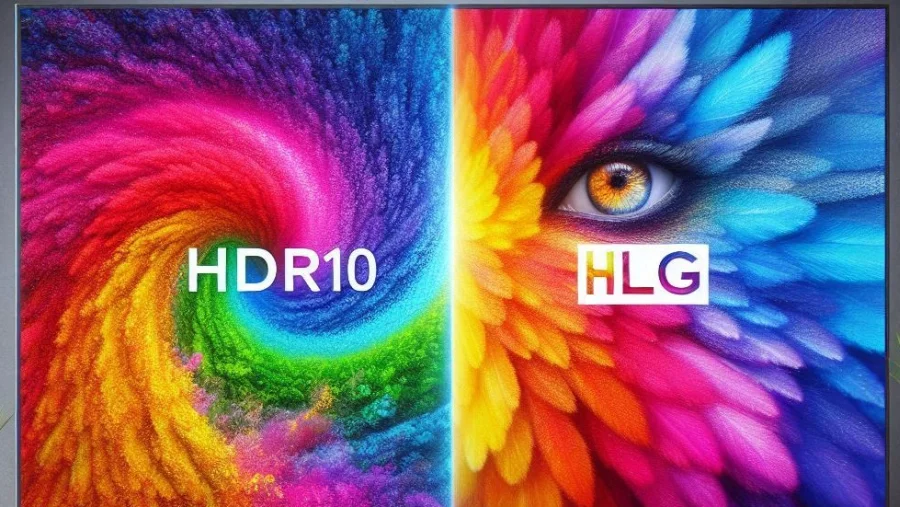
In addition to formats we mentioned above, honorable mention belongs to another HDR format known as HLG or Hybrid Log Gamma. This format is supported by all contemporary TVs and seeks to streamline the viewing experience by merging SDR and HDR into a single signal.
This makes it perfect for live broadcasts, as any device that receives the signal can interpret it. If the device is HDR-compatible, it will render the content in HDR; otherwise, it will default to the SDR component of the signal.
Hybrid Log-Gamma is a HDR standard that was co-developed by the BBC and NHK. It’s unique in its design to be backward compatible with standard dynamic range (SDR) displays, which use what’s known as a gamma curve.
The upper half of the signal values in HLG use a logarithmic curve, allowing for a wider dynamic range. This is what makes HLG particularly useful for broadcasting, where other HDR formats’ required metadata isn’t backward compatible with non-HDR displays.
An added advantage of HLG is that it’s royalty-free, which simplifies and reduces costs for equipment manufacturers and content distributors. It is used by various video services including BBC iPlayer, DirecTV, Freeview Play, and YouTube.
HDR10 vs HDR10+ vs Dolby Vision: Comparison
When comparing these formats directly, several dimensions matter: metadata type, color depth, peak brightness support, content availability, device support, and cost.
| Feature | HDR10 | HDR10+ | Dolby Vision |
|---|---|---|---|
| Metadata | Static | Dynamic | Dynamic |
| Color Depth | 10-bit | 10-bit | 12-bit |
| Peak Brightness | 10,000 nits | 10,000 nits | 10,000 nits |
| Licensing | Free / Open | Free / Open | Licensed (paid) |
| Samsung TVs | ✅ | ✅ | ❌ |
| LG / Sony TVs | ✅ | ✅ | ✅ |
| Apple Devices | ✅ | ✅ | ✅ |
| Netflix | ✅ | ✅ | ✅ |
| Amazon Prime Video | ✅ | ✅ | ✅ |
| Disney+ | ✅ | ✅ | ✅ |
| Apple TV+ | ✅ | ✅ | ✅ |
HDR10 relies on static metadata and 10-bit color, and because it costs nothing to license, virtually every HDR display supports it. Think of it as the baseline every other format builds on.
HDR10+ builds on that baseline by introducing scene-by-scene dynamic metadata, while staying free to implement. You’ll find it on Samsung and Apple hardware, along with a growing list of other brands, and it’s backed by major services like Netflix and Amazon Prime Video.
Dolby Vision goes further still, pairing dynamic metadata with 12-bit color depth and a certified mastering process. It’s widely adopted by LG, Sony, and Apple, but its licensing fees keep it off Samsung TVs and many budget-tier devices.
Judged purely on technical capability, Dolby Vision sits at the top, HDR10+ in the middle, and HDR10 at the base. That said, this ranking only holds true when comparing similarly capable screens and similarly careful content mastering.
In real-world viewing, a well-mastered HDR10 stream on a high-end 4K OLED can look stunning – arguably outperforming a poorly implemented Dolby Vision setup on weaker hardware. The format sets the upper limit; it’s the display and the mastering work that decide how much of that potential you actually see.
When it comes to premium content, Dolby Vision is increasingly the format of choice among major streamers. Titles with Dolby Vision show up on Netflix, Apple TV+, Disney+, and HBO Max. HDR10+ content is also available through Netflix, Amazon Prime Video, Apple TV+, and Disney+. Meanwhile, HDR10 remains the universal fallback, present on nearly every platform.
Q&A
Is HDR10+ better than Dolby Vision?
Dolby Vision generally edges out HDR10+ in potential performance due to its support for higher color depths (up to 12-bit vs. HDR10+’s 10-bit) and higher theoretical peak brightness (up to 10,000 nits vs. 4,000 nits).However, both use dynamic metadata to adjust brightness and contrast frame-by-frame, meaning real-world picture quality is almost identical on most consumer TVs.Dolby Vision simply benefits from broader industry adoption among television manufacturers and streaming libraries.
Does Netflix use HDR10+ or Dolby Vision?
Netflix supports both formats, as well as baseline HDR10.While Dolby Vision has been available on Netflix for years, the platform expanded its library to include HDR10+ content to deliver dynamic metadata optimizations to compatible screens like Samsung TVs.Watching in either format requires a Netflix Premium plan and a TV or streaming box that supports the specific HDR format.
Is Dolby Vision the highest quality?
Yes, Dolby Vision is widely considered the highest-quality commercially available HDR format for consumer displays. It provides strict mastering guidelines and dynamically adjusts contrast, brightness, and color levels frame-by-frame rather than applying a single setting to the whole video.While it offers technical headroom (12-bit color, 10,000 nits brightness) beyond what most consumer panels can currently display, its advanced tone-mapping ensures you get the most accurate picture possible on your TV.
Should I turn on HDR10+ on Samsung?
Yes, you should definitely turn on HDR10+ if your Samsung TV gives you the option. Samsung TVs do not support Dolby Vision, so enabling HDR10+ ensures you get dynamic metadata processing.This dynamically optimizes dark shadows and bright highlights on a frame-by-frame basis, giving you significantly better image detail and color accuracy compared to standard HDR10.
Is HDR10 as good as 4K?
HDR10 and 4K cannot be directly compared because they measure two completely different specs. 4K refers to resolution (the number of pixels in the image), while HDR10 refers to color and dynamic range (the range between the darkest blacks and brightest whites). A video can be 4K without HDR, or 1080p HD with HDR. Most video experts agree that adding HDR delivers a far more striking and noticeable visual upgrade than just adding more pixels.
Which TVs support both HDR10+ and Dolby Vision?
Many major TV manufacturers include dual format support so you don’t have to choose.TV brands like Hisense, TCL, Panasonic, and Philips frequently offer models that support both Dolby Vision and HDR10+.The notable exceptions are Samsung (which only supports HDR10+) and LG and Sony (which support Dolby Vision and HDR10, but omit HDR10+).
Read Next

MLA OLED: Brighter Displays with Micro Lens Array

HDR Gaming: Elevating Entertainment with Realism

1440p Resolution: The Definitive Guide to QHD
HDR vs SDR: What You Need to Know

HDR On or Off? How to Decide
UWQHD vs 4K: How to Decide Between Ultra-Wide and Ultra-Detail

HDR True Black 400, 500, 600: New Era of Darker Blacks in Display Technology

HGiG Mode for HDR gaming: Explanation
HDR400: Understanding Entry-Level HDR Display Technology

4K Resolution: Ultimate Experience for TVs and Monitors
Samsung Odyssey OLED G8/G80SD S32DG80 Review: 4K 240Hz 0.03ms; Ultra-Sharp Masterpiece for Gamers

1ms MPRT Response Time: The Key to Smoother Gaming
HDR10 vs HLG: Comparing HDR Technologies